Event Security in Malaysia: Planning and Coordination Behind the Scenes
A successful concert is remembered for what happens on stage. What audiences do not always see is the planning and coordination behind the scenes that keeps the event running safely.
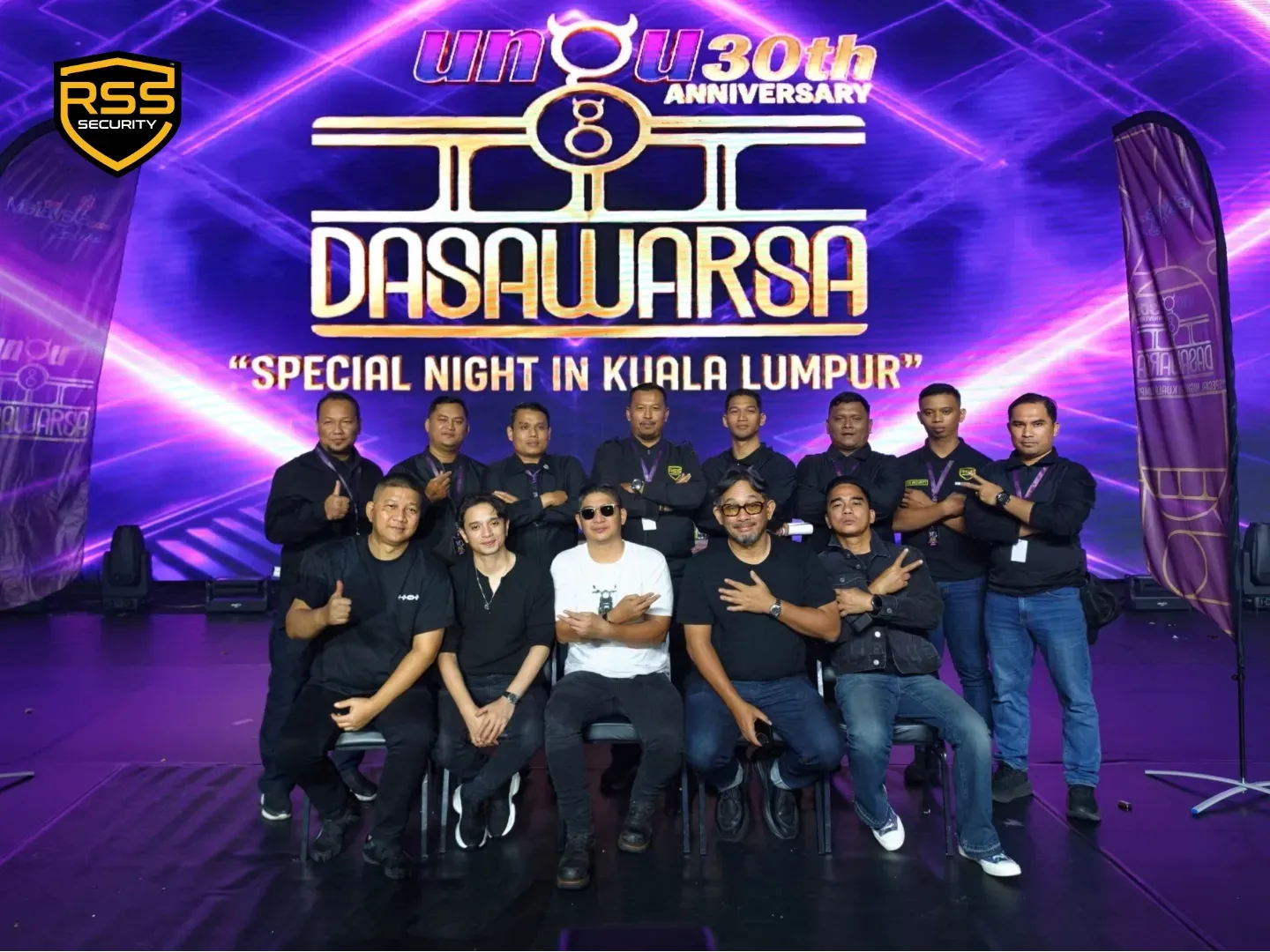
The recent Ungu 3 Dasawarsa: Special Night in Kuala Lumpur was one such occasion we facilitated. The anniversary concert, celebrating three decades of the Indonesian band's musical journey, brought nearly 4,000 fans to Idea Live Arena Kuala Lumpur. According to Utusan Malaysia, fans filled the venue and sang along to many of Ungu's well-known songs throughout the evening.
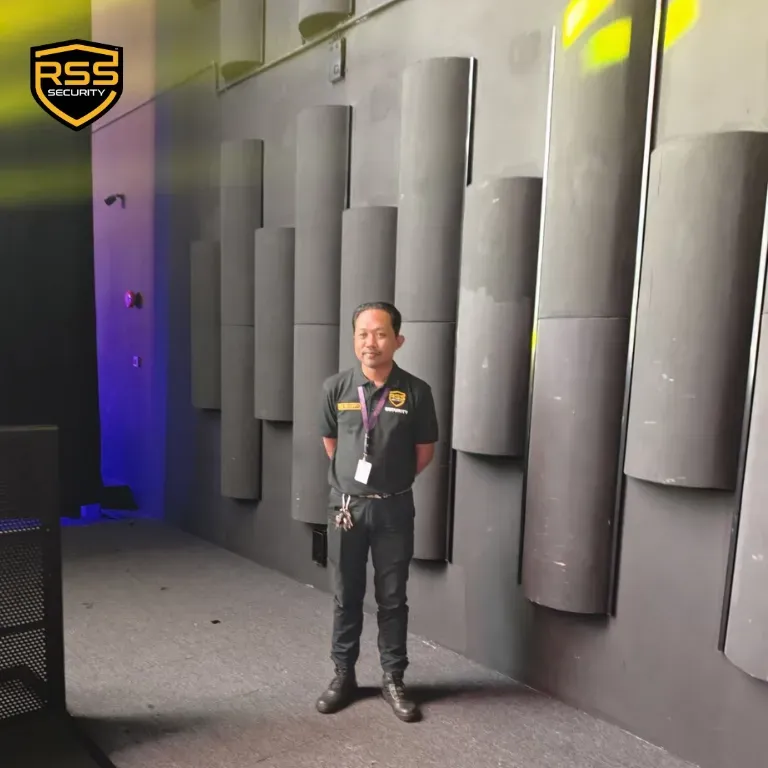
For an event of this scale, security planning has to begin before the first attendee enters the venue. RSS Security supported the concert through coordinated security deployment and on-site operations.
What Goes Into Event Security Planning?
When thousands of people gather in one location, security cannot simply mean placing guards at the entrance. Before an event begins, the security team needs to understand:
- The venue
- Expected attendance
- Access points
- Restricted areas
- Crowd flow
- Potential risks
These factors determine where personnel are positioned and how teams communicate throughout the event.
For concerts featuring foreign artists, security planning is also part of the wider requirements for organizing performances. The PUSPAL Guidelines for Foreign Artist Performances require:
- Organizers to submit their security procedure plan to the Royal Malaysia Police (PDRM) for confirmation
- Trained security personnel
- Security checks, including body and bag inspections, at entry points
- Functioning CCTV systems
The guidelines advise:
- One security person for every 50 attendees
- One paramedic for every 250 attendees
- One ambulance for every 1,000 attendees
These ratios are a starting point. The actual deployment still needs to reflect the venue layout, event format, access arrangements and any VIP or restricted areas.
Access Control and Crowd Movement
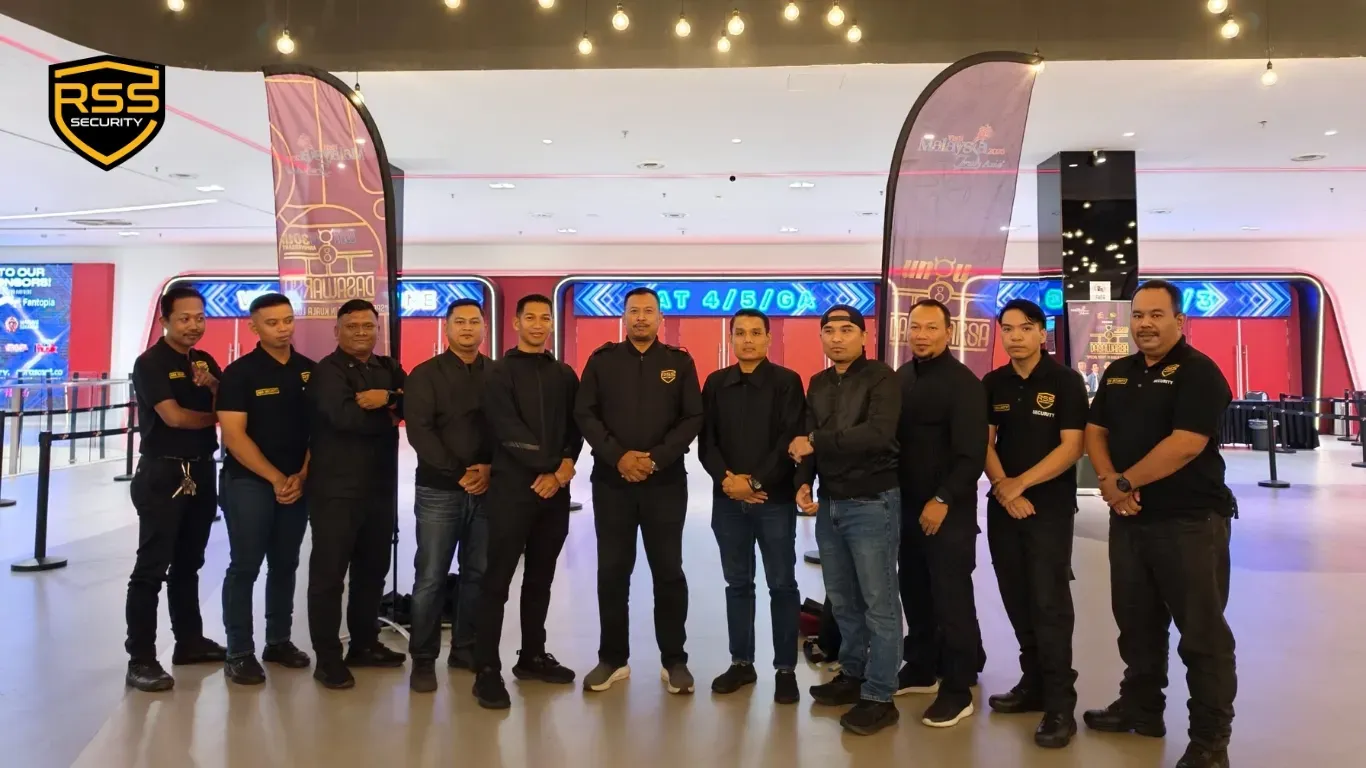
For most concertgoers, the first interaction with event security happens at the entrance. This is where queues form, tickets are checked and attendees move into different areas of the venue. Depending on the event, security personnel may also screen bags, manage restricted access and direct attendees to the right entrances.
The objective is to keep people moving in an orderly way while keeping control over who can enter specific areas. When many attendees arrive within a short period, poorly managed access points create congestion and make it harder to spot problems. Access control should be part of the overall event plan, not just an entrance function.
Crowd management does not end once everyone is inside. During a concert, people move continuously: toward facilities, around particular sections, or toward the exits before the performance has ended. When the concert finishes, movement changes again as a large crowd leaves at roughly the same time.
Guards may be assigned to entrances, exits, restricted areas and corridors, with supervisors coordinating these teams to keep visibility across the venue. Good crowd security works quietly in the background while helping the event move smoothly.
Guard Coordination and On-Site Communication
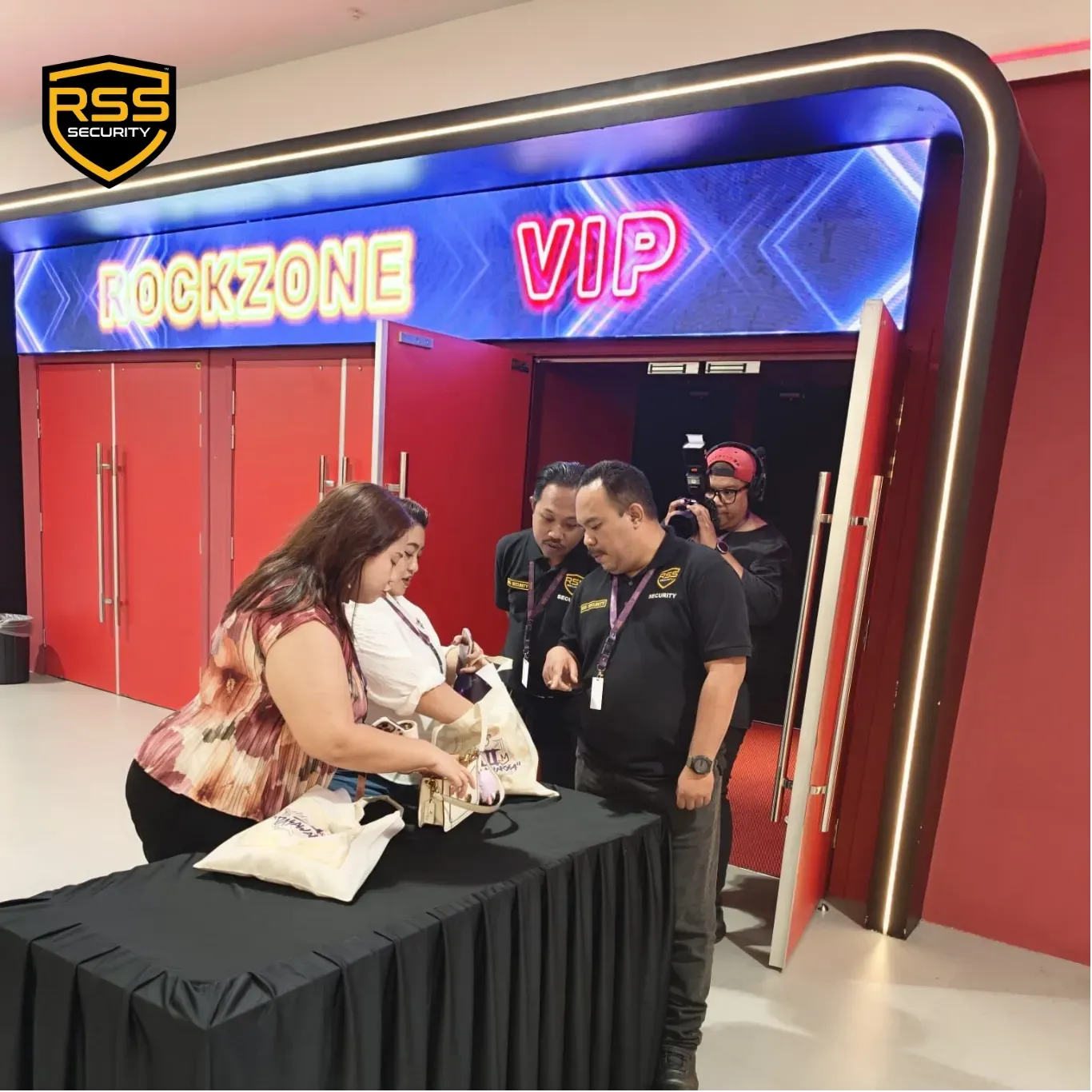
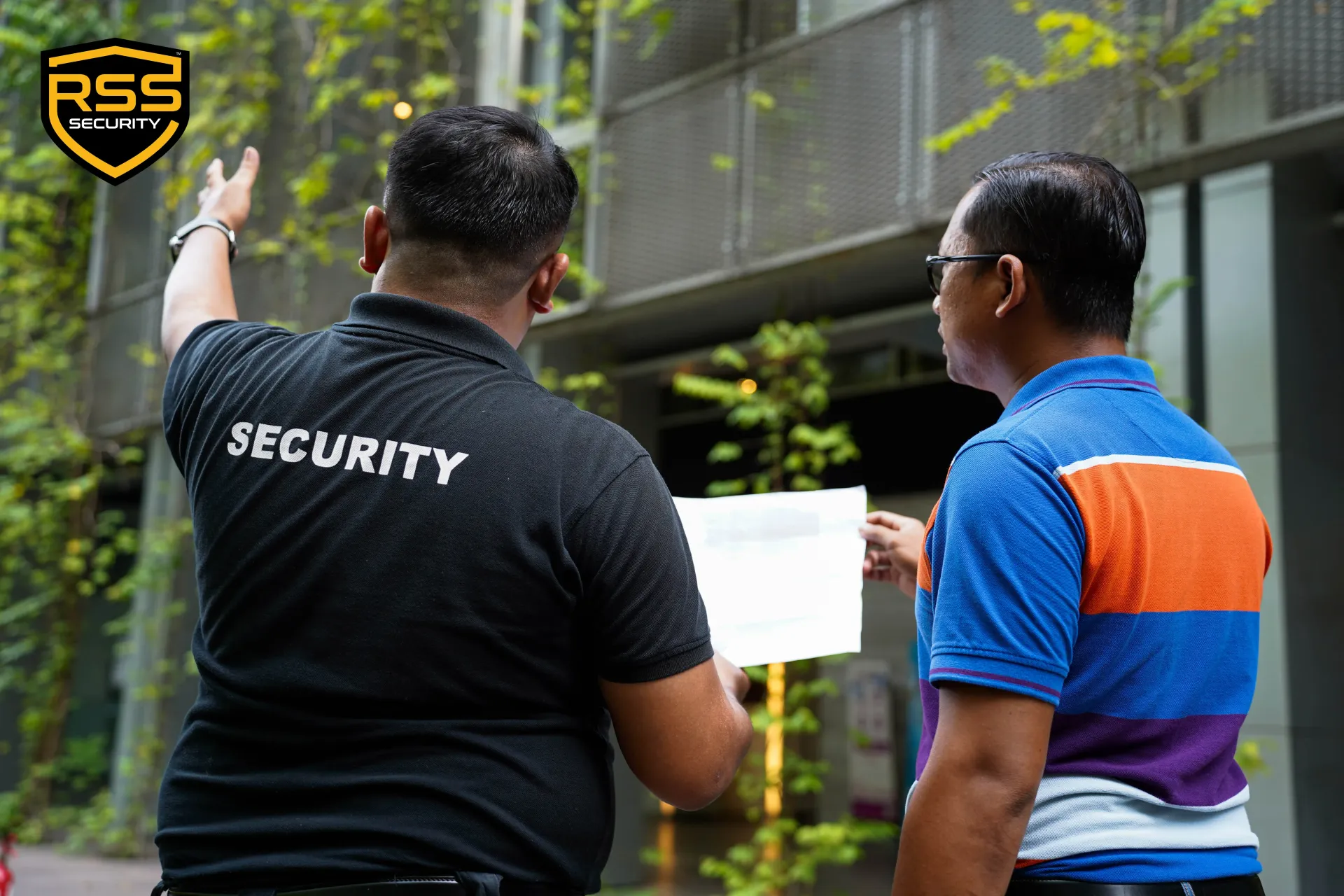
A large event can involve personnel working across several locations at once: an entrance, an internal access point, the stage area, backstage zones, VIP areas and the perimeter.
Without clear coordination, each team only sees what is happening around it.Before deployment, guards need to understand their positions, responsibilities and escalation procedures.
During the event, supervisors relay information between teams and coordinate responses. In a loud, crowded environment, this lets security personnel respond through an established chain of command instead of reacting independently.
The effectiveness of a security operation depends not only on the number of guards deployed, but on how well they work together.
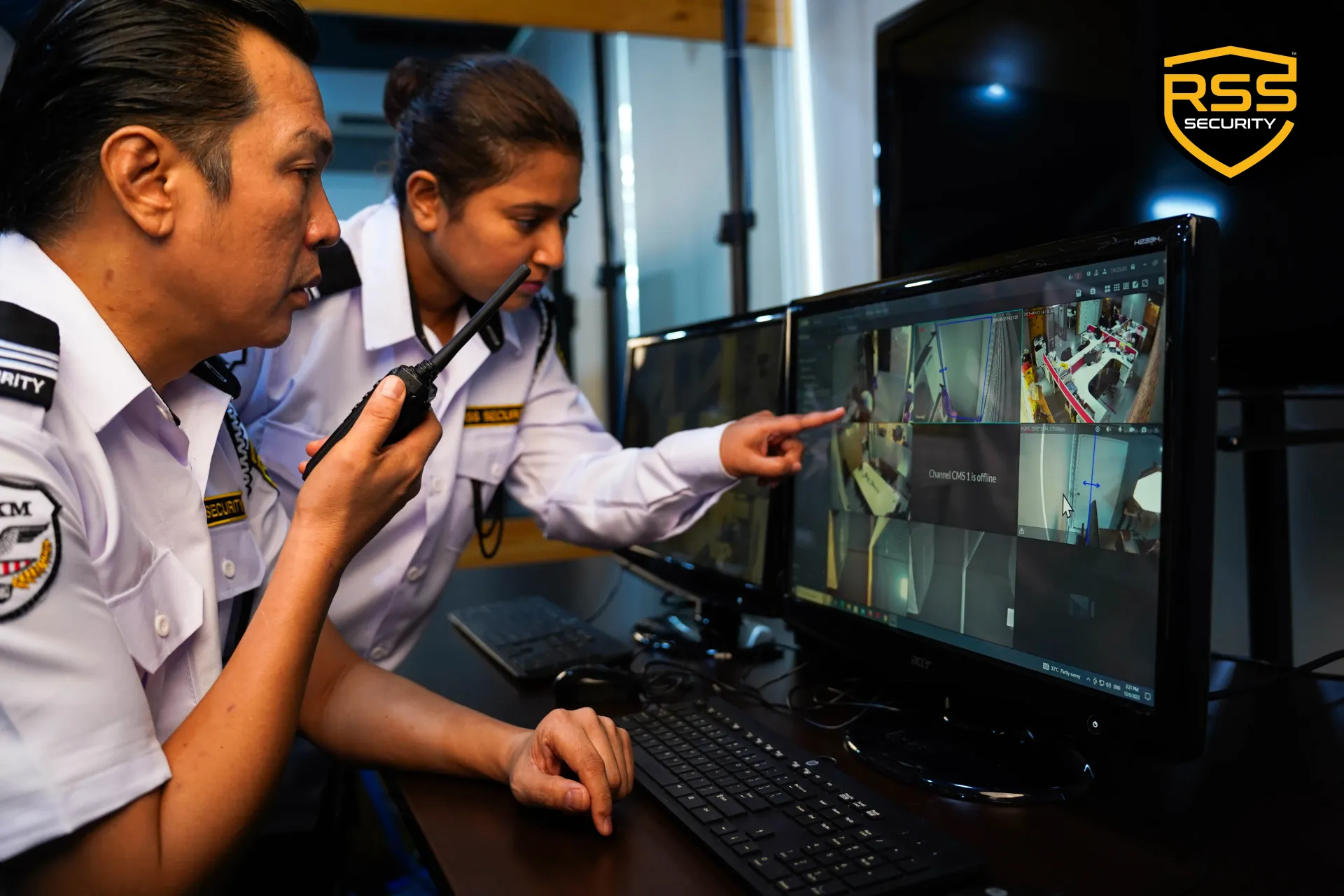
Technology can support this. CCTV monitoring adds visibility around the venue, and
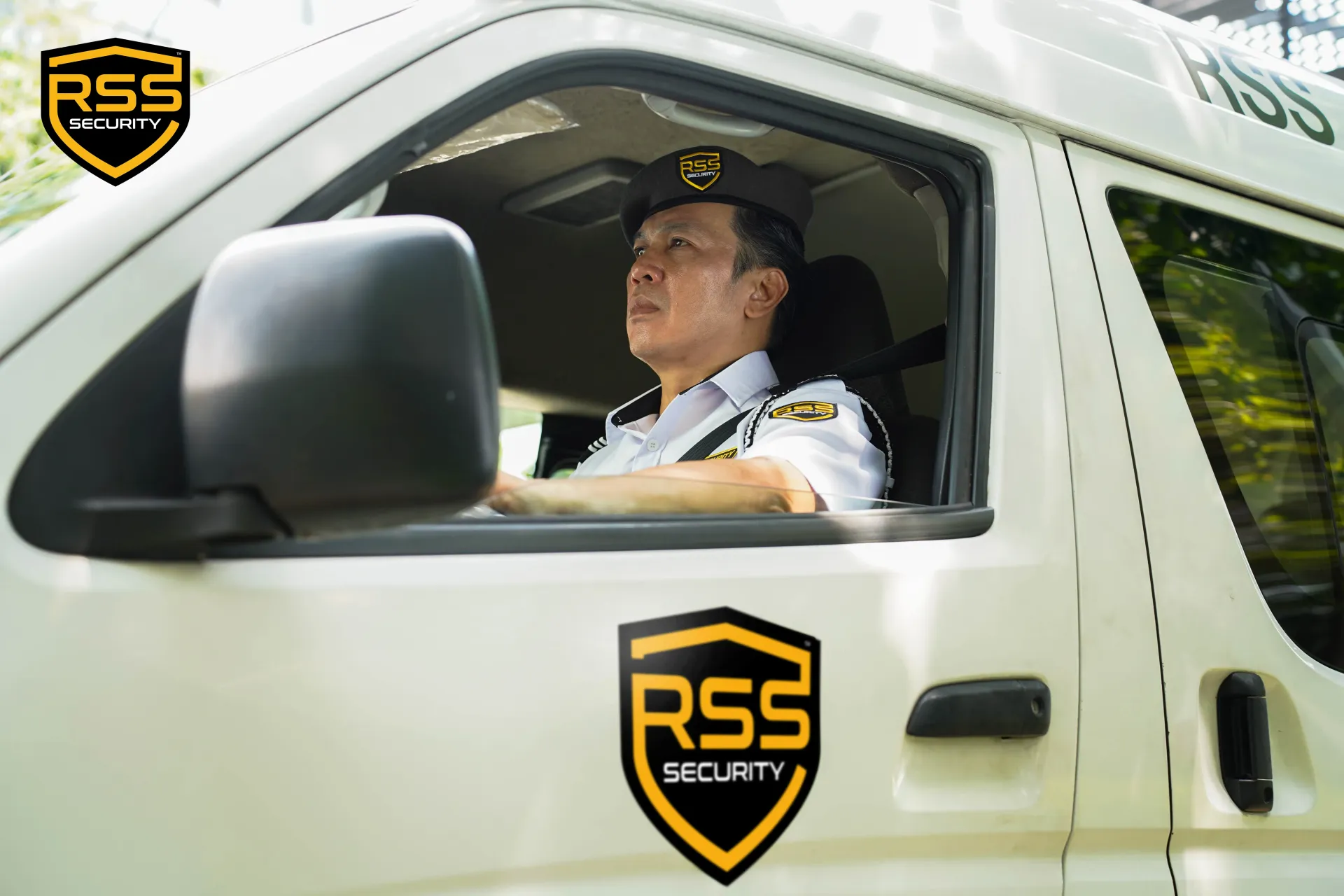
mobile patrols help cover larger areas, with guards, CCTV and access control
working together as one coordinated operation.
How Should You Choose an Event Security Company?
Choosing a security provider for a concert, corporate event, launch or exhibition involves more than comparing quotations. It sits within the wider checklist for choosing a security company in Malaysia, and for events, four questions are worth asking.
1. Is the company properly licensed?
Private security companies in Malaysia operate within a regulatory framework overseen by the Ministry of Home Affairs (KDN). Verify that the provider is properly licensed before engaging it. The checks involved are part of security regulations and compliance in Malaysia.
2. Does the company have relevant experience?
Security requirements differ between a commercial building, a residential property and a live concert. Look for experience with access control, crowd environments, restricted areas and coordinated deployments.
3. Can the company assess the event's specific risks?
Every venue is different. A professional provider should consider the event's layout, access points and crowd expectations before recommending a deployment. RSS Security provides risk assessment and security consultation, and what security companies assess before deploying guards is a useful reference for what such an assessment covers.
4. Can the provider offer more than one security solution?
An event may need guards, escorts, bodyguards, surveillance monitoring, mobile patrolling or short-term personnel. An integrated provider makes it easier to coordinate these under one security operation. RSS Security's full range of services includes all of these, plus RSS GoGuard™ for short-term security needs.
All Posts